The Morning Begins With Thread
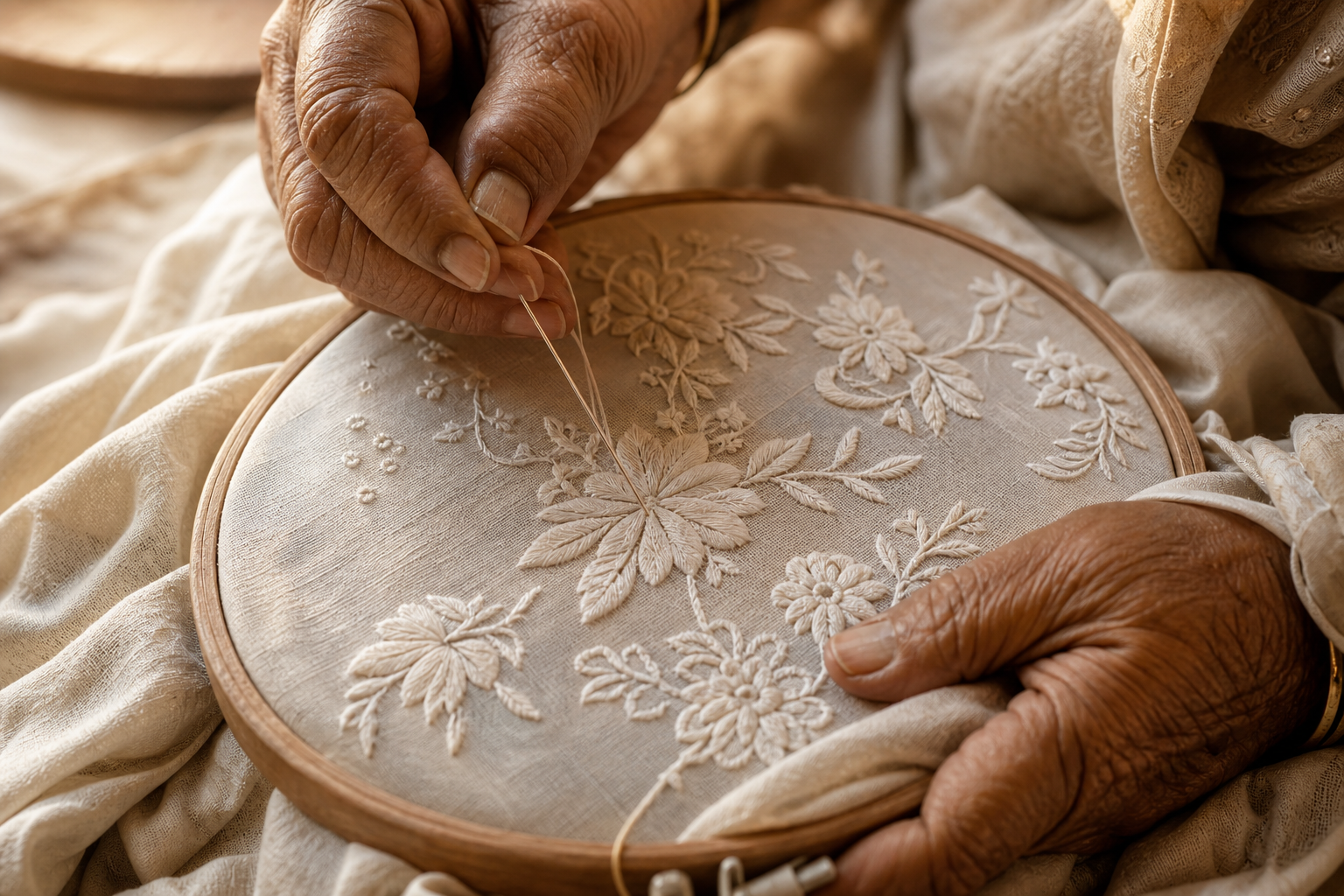
A Chikankari artisan's day begins early. By the time the city stirs, the needle is already moving. The fabric — fine cotton muslin or georgette — has been washed, starched and stretched. The design, transferred by block print in a pale blue ink that will wash away later, waits to be brought to life. This is work that cannot be hurried.
Most artisans in Lucknow's Chikankari community are women. They work from home — in the same rooms where they cook, care for children and receive guests. The embroidery frame rests across their knees or between their feet. The needle moves with a rhythm that looks effortless and is, in truth, the result of decades of practice.
Passed Down Through Generations
Chikankari is rarely formally taught. It is inherited. Daughters sit beside mothers; granddaughters beside grandmothers. The first stitches are clumsy. The thread puckers. The dots are uneven. But with patience — always patience — the hand learns what the eye already knows. By the time a girl reaches her teens, she may already have several years of practice behind her.
This transmission of knowledge is as much a part of Chikankari as the stitches themselves. The techniques are not written down. They live in hands. They are passed through touch and demonstration, through correction and encouragement, through a grandmother's voice saying, again, do it again, softer this time.
“When my mother taught me the phanda stitch, she did not explain it. She held my hand and moved it. That is how this craft has always been taught.”
The Invisible Labour
There is a paradox at the heart of Chikankari. The finest pieces — those that command the greatest admiration — bear the least visible evidence of the labour behind them. The stitches are so small, so uniform, so perfectly placed that they seem almost to have appeared rather than been made. This invisibility is itself the achievement.
A heavily embroidered saree might represent four hundred hours of work. A fine dupatta, perhaps sixty. This labour is rarely reflected in what the artisan is paid — one of the great ongoing injustices of the craft economy that organisations like Naqsh are working, quietly and persistently, to address.
When you wear a Naqsh piece, you carry more than beautiful embroidery. You carry the hours and the hands and the knowledge of the person who made it. That is worth knowing. It is worth holding gently. And it is, in the deepest sense, why what we make is different from what is merely manufactured.